Blog › Deck & Porch Construction
Cost to Build a Deck in Massachusetts: A 2026 Guide from Local Contractors
Thinking about adding a deck to your Massachusetts home in 2026? The first question most homeowners ask is simple: how much is this going to cost? The honest answer is — it depends. But that’s not a dodge. Deck pricing in Massachusetts genuinely varies based on size, materials, design complexity, and local labor rates.
This guide breaks down every major cost factor so you can plan your budget with confidence — and avoid the surprise invoices that catch too many homeowners off guard. If you’re ready to skip straight to numbers for your specific project, our team offers free in-home estimates throughout Greater Boston.
*Pricing varies based on project scope, materials selected, and site conditions. Contact us for a personalized estimate.
Why the cost to build a deck in Massachusetts varies so much
Two homeowners in the same town can get two very different quotes — even for decks that look the same on paper. That’s not a red flag. It reflects real differences in scope, materials, and what’s actually included in the price.
Massachusetts also adds layers that other states don’t. Local building codes in communities like Cambridge, Somerville, and Arlington require permits for most new decks. Inspections are standard. And labor rates in Greater Boston are among the highest in New England — that’s the trade-off for working with experienced, licensed and insured contractors who know the local code inside and out.
Here are the five biggest variables that move your total:
- Square footage — more deck = more materials + more labor
- Decking material — pressure-treated pine, composite, PVC, or tropical hardwood all carry different price tags
- Height and structural complexity — a ground-level platform is simpler than a second-story deck with ledger attachment
- Railing type — basic wood balusters vs. cable rail vs. glass panels
- Extras — built-in benches, pergolas, stairs, lighting, and under-deck drainage all add to the scope
Deck material costs: what are your options in 2026?
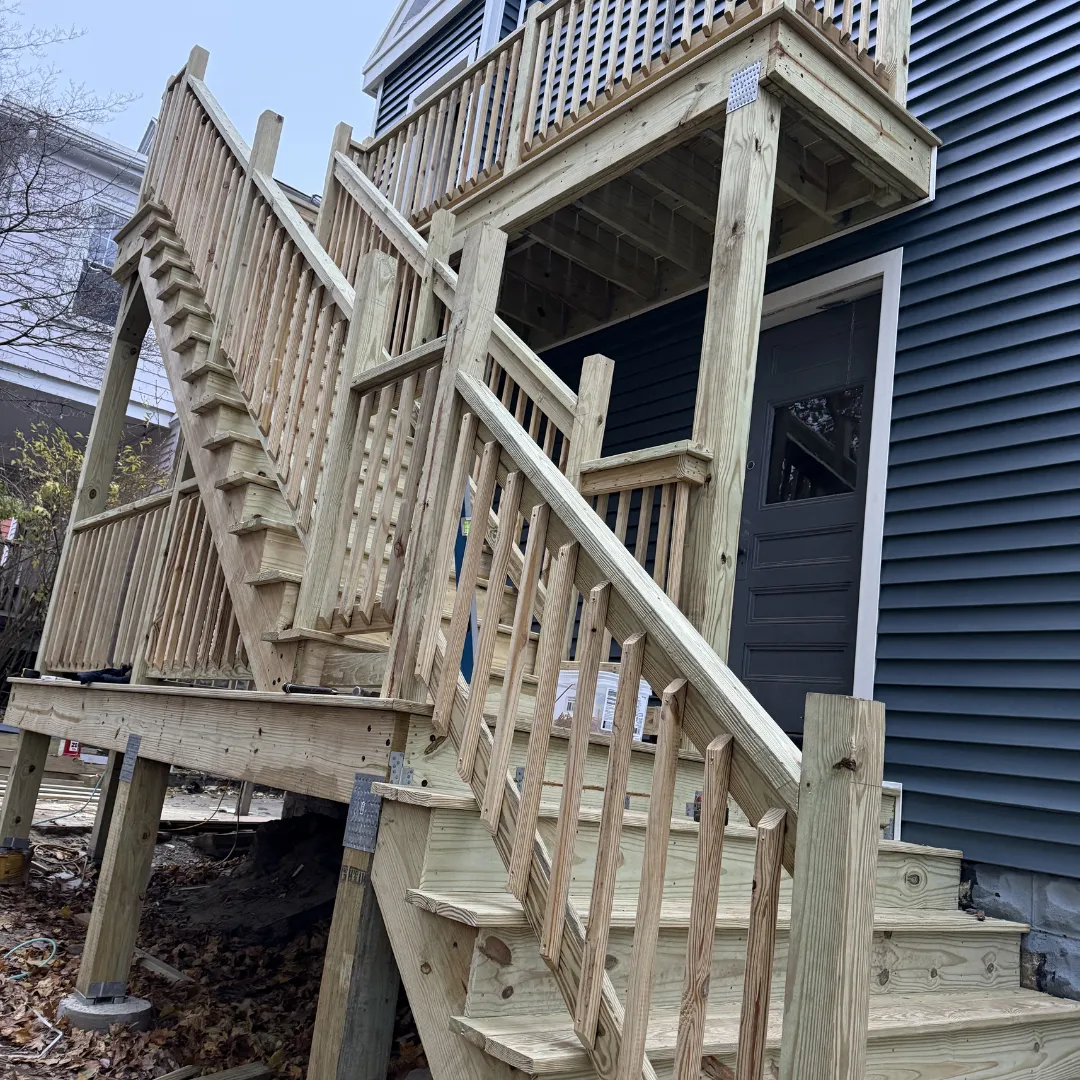
Material choice is the single biggest lever you have on your total budget. Each option has real trade-offs between upfront cost, long-term maintenance, and lifespan — especially in a New England climate where freeze-thaw cycles and wet winters are hard on outdoor structures.
Pressure-treated lumber (PT wood)
This is the most common choice for Massachusetts homeowners. Pressure-treated pine is affordable, widely available, and holds up well when properly maintained. It needs to be sealed or stained every few years to prevent warping and cracking in our climate.
Nationally, PT wood decks typically run in the lower to mid range of the overall cost spectrum.* It’s the go-to for homeowners who want a solid, functional deck without the premium price of composite.
*Pricing varies based on project scope, materials selected, and site conditions. Contact us for a personalized estimate.
Composite decking (Trex, TimberTech, Fiberon)
Composite is the fastest-growing material category in Massachusetts deck builds. It costs more upfront than pressure-treated wood — nationally, composite decks often run $10,000*–$20,000* more than an equivalent PT build — but it requires almost no ongoing maintenance. No staining, no sealing, and it resists fading, staining, and mold far better than natural wood.
For homeowners planning to stay in their home long-term, composite often pencils out better over a 15–20 year horizon. It also tends to add more resale value.
*Pricing varies based on project scope, materials selected, and site conditions. Contact us for a personalized estimate.
PVC decking
Fully synthetic PVC decking is the most low-maintenance option available. It won’t rot, won’t absorb moisture, and holds its color well. It’s priced at the higher end of the material spectrum — typically above composite — and is most popular in coastal or high-moisture environments where wood degradation is a constant concern.
Tropical hardwoods (Ipe, Tigerwood)
Hardwood decks are stunning and extremely durable — Ipe, for example, can last 40+ years with proper care. They’re also the most expensive material option and require a contractor experienced in working with dense, hard-to-fasten lumber. If aesthetics and longevity are the top priority, hardwood is worth the conversation.
Deck size and what it means for your budget
Square footage is the most straightforward cost driver. More deck = more decking boards, more framing lumber, more fasteners, more labor hours.
Most residential decks in Massachusetts fall into one of three size categories:
| Deck Size | Typical Use Case | Notes |
|---|---|---|
| Small (under 200 sq ft) | Back door landing, small yard, condo townhouse | Lower material volume; labor still accounts for a significant share of total cost* |
| Medium (200–400 sq ft) | Standard backyard deck for outdoor dining + lounging | Most common size range for single-family homes in Greater Boston* |
| Large (400+ sq ft) | Multi-level decks, wraparound designs, entertainment spaces | Structural complexity increases; permits and engineering may be required* |
*Pricing varies based on project scope, materials selected, and site conditions. Contact us for a personalized estimate.
One thing Massachusetts homeowners often underestimate: labor doesn’t scale linearly with size. Mobilization, site prep, permit pulling, and framing all carry fixed costs regardless of whether the deck is 150 or 300 square feet. That’s why smaller decks often have a higher cost-per-square-foot than larger ones.
Permits, inspections, and Massachusetts building code
This is the part many out-of-state guides skip — but it matters a lot if you’re building in Massachusetts.
Do you need a permit to build a deck in Massachusetts?
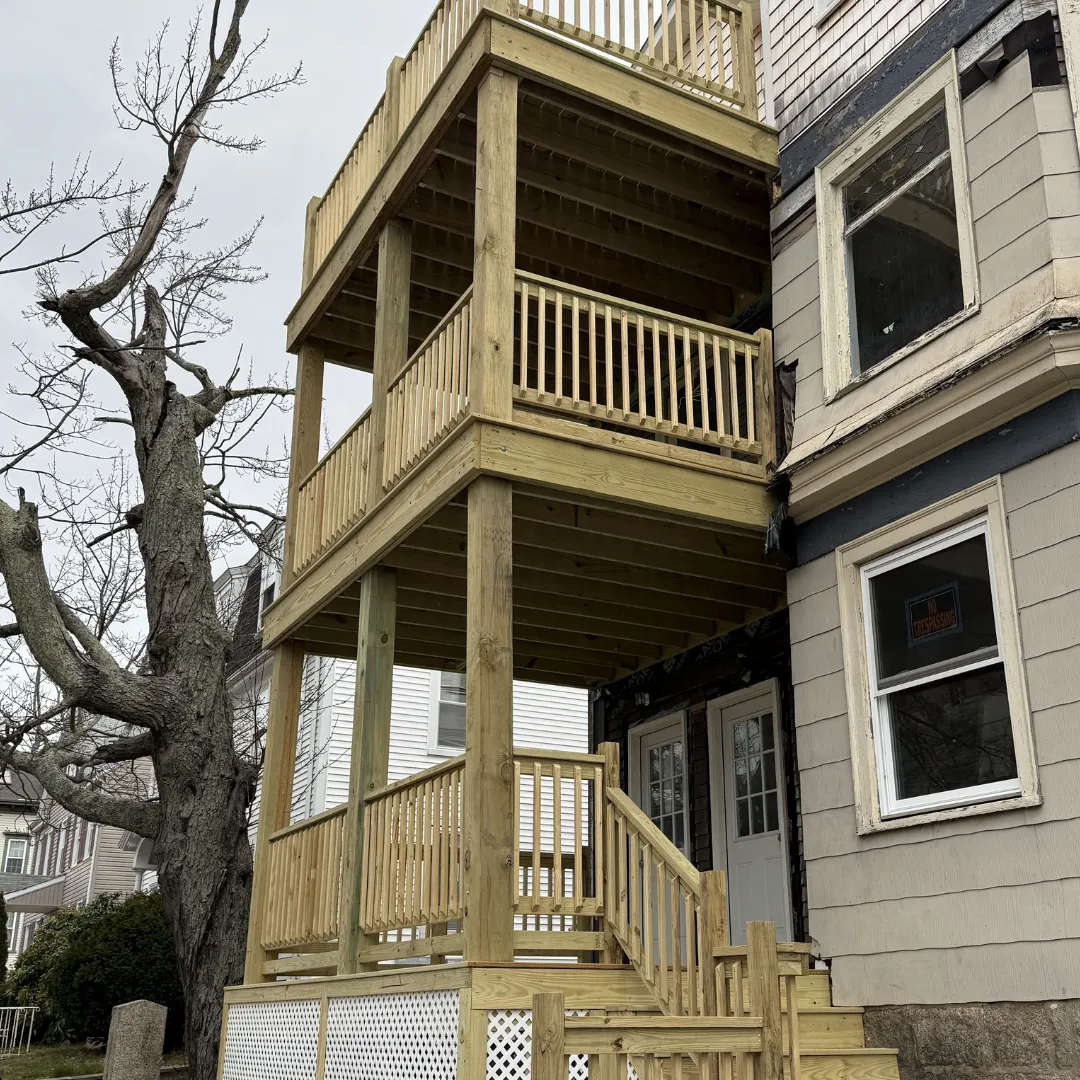
In most cases, yes. Massachusetts building code generally requires a building permit for any deck that is attached to the home, elevated more than 30 inches above grade, or exceeds a certain square footage threshold (which varies by municipality). Ground-level freestanding platforms sometimes fall under the threshold, but it depends on your town.
Cities like Cambridge, Somerville, Arlington, and Medford all have active building departments that enforce permit requirements. Working without a permit can result in fines, a stop-work order, and — most importantly — problems when you try to sell your home. An unpermitted deck can kill a real estate deal.
What does a permit cost in Massachusetts?
Permit fees vary by municipality and are typically calculated as a percentage of the project value. Nationally, deck permits run anywhere from $150* to $1,000* or more depending on the scope and the town. In Greater Boston, expect fees on the higher end of that range. A reputable contractor will pull the permit on your behalf and include it in the project scope.
*Pricing varies based on project scope, materials selected, and site conditions. Contact us for a personalized estimate.
What about inspections?
Most permitted deck projects in Massachusetts require at least one inspection — often a framing inspection before decking is installed, and a final inspection at completion. Your contractor coordinates this directly with the building department. It’s part of a professional, above-board project process.
Railings, stairs, and features that affect your total
The base deck — framing, decking boards, ledger attachment — is just the starting point. Most homeowners add features that meaningfully change the final number.
Railing systems
Railings are required by Massachusetts building code for any deck surface more than 30 inches above grade. Options range from basic pressure-treated wood balusters (most affordable) to aluminum-framed cable rail (mid-range) to frameless glass panel systems (premium). The railing system you choose can add anywhere from a few thousand dollars to $15,000* or more to a large deck project.
*Pricing varies based on project scope, materials selected, and site conditions. Contact us for a personalized estimate.
Stairs
Every elevated deck needs stairs. A simple single-run stair is straightforward. Wider stairs, multi-run configurations, or landings add complexity and cost. In dense neighborhoods like Somerville and Cambridge, where yard space is limited, stair placement and design often require careful planning.
Built-in features
Built-in benches, planters, pergolas, shade structures, outdoor lighting, and under-deck drainage systems are all popular additions in Massachusetts. Each one adds to the scope — and to the value of the finished space. Plan these upfront so your contractor can account for them in the structural design, not as an afterthought.
What does the deck building process look like with a local contractor?
Understanding the process helps you understand why professional deck construction is priced the way it is — and what separates a contractor who builds decks that last from one who cuts corners.
Step 1: In-home estimate and design
A professional contractor comes to you. We assess the site, discuss your goals, review the existing structure (if attaching to the home), and talk through material and design options. This is where the scope gets defined — and where you get a real price, not a ballpark.
Step 2: Permit application
For most Massachusetts deck projects, the contractor prepares and submits the permit application to your local building department. This includes drawings, specifications, and the required fees. Permit timelines vary — typically one to three weeks in most Greater Boston communities.
Step 3: Site prep and footing installation
In Massachusetts, deck footings must extend below the frost line — typically 48 inches deep. This is non-negotiable in our climate. Footings that don’t go deep enough will heave and shift, compromising the entire structure. Proper footing installation is one of the most important things a local contractor gets right.
Step 4: Framing and structural work
Beams, joists, ledger attachment (if applicable), and posts are installed according to the permitted drawings. This is the skeleton of the deck — and the framing inspection happens here before decking goes down.
Step 5: Decking, railings, and finish work
Decking boards are installed, railings are built, stairs are framed and finished, and any built-in features are completed. Final inspection follows, and the project is closed out with the building department.
Our team handles deck and porch construction throughout Greater Boston — from the initial estimate through final inspection. We come to you, pull the permits, and handle the entire process.
How to get an accurate deck quote in Massachusetts
Getting a quote that actually reflects your project — not a low number designed to win the job — comes down to asking the right questions before anyone picks up a hammer.
Ask what’s included in the base price
Does the quote include permit fees? Footings? Railings? Stairs? Hauling away the old deck if there’s one? A detailed scope prevents the surprise line items that show up on the final invoice.
Confirm the contractor is licensed and insured
Any contractor doing structural work on your home in Massachusetts should carry general liability insurance and workers’ compensation. Ask for certificates before work begins. This protects you — not just the contractor.
Understand the material specifications
Two quotes for a “composite deck” can be thousands of dollars apart if one uses a premium brand like Trex Transcend and the other uses an entry-level composite. Make sure you’re comparing the same material grade, not just the same material category.
Get the permit responsibility in writing
Confirm that the contractor will pull the permit — not leave it to you. A contractor who asks you to pull your own permit is often trying to avoid the accountability that comes with a permitted project.
Deck vs. porch: what’s the difference and does it change the cost?
In Massachusetts, homeowners often use “deck” and “porch” interchangeably — but they’re structurally different, and the difference affects cost.
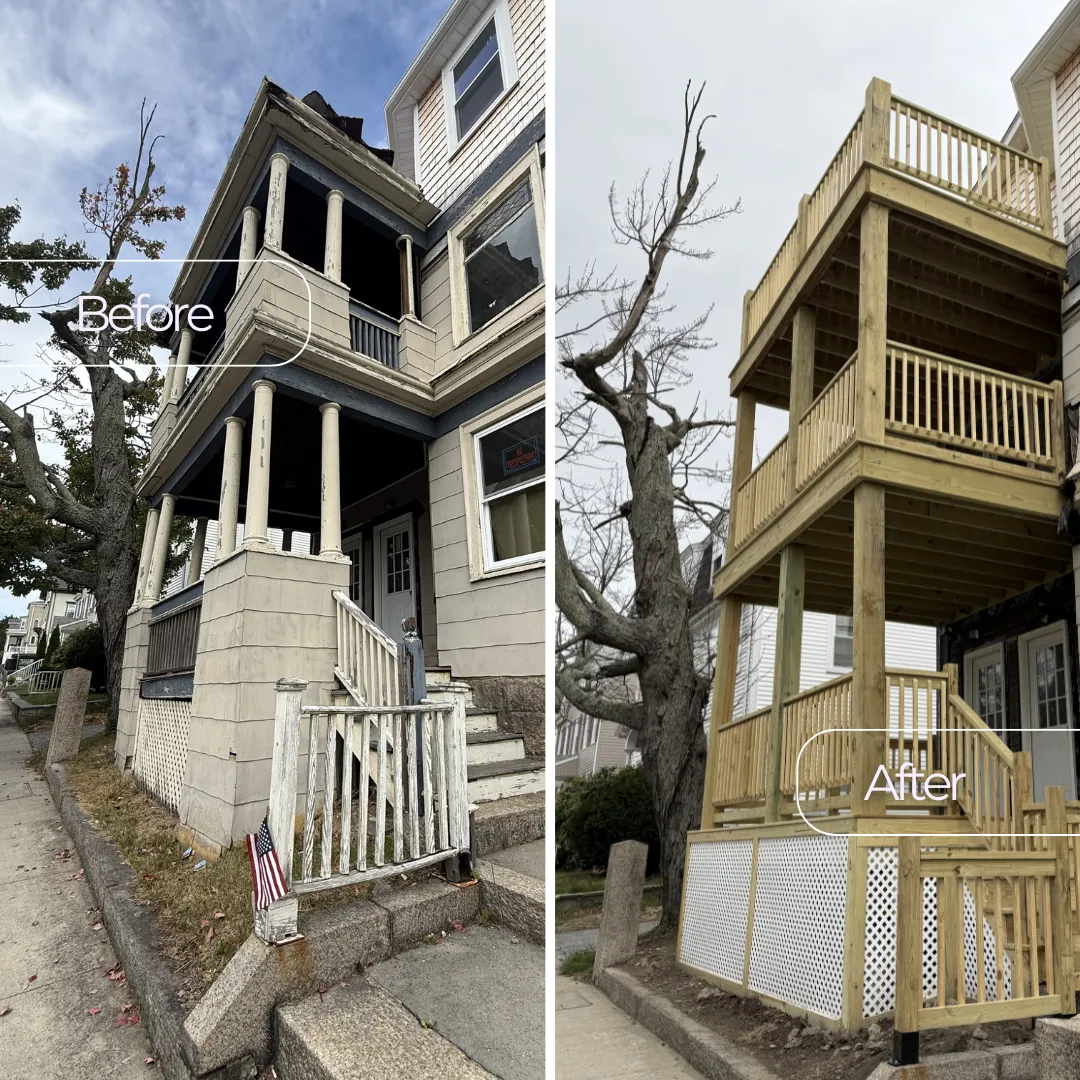
A deck is an open, uncovered outdoor platform — attached to the home or freestanding. A porch typically refers to a covered structure, often at the front or back of the home, that may be screened or enclosed. Porches generally cost more than open decks of the same size because of the additional roofing, framing, and structural work involved.
If you’re considering a covered porch addition or a screened-in outdoor living space, that’s a different scope than a standard deck build — and worth discussing separately with your contractor. You can learn more about our approach to deck and porch construction on our services page.
Deck cost vs. home value: is it worth it in Massachusetts?
One of the most common questions we hear: will a new deck add value to my home?
The short answer is yes — but the return varies. According to national remodeling cost vs. value data, wood decks typically recoup 60–70% of their cost at resale, while composite decks often perform similarly or slightly better in markets where buyers value low-maintenance outdoor living. In competitive Greater Boston markets — Cambridge, Somerville, Arlington, Medford — outdoor living space is a genuine selling point.
More importantly, a deck adds usable square footage to your home while you’re living in it. For Massachusetts families who spend summers and shoulder seasons outdoors, the value of that space is real long before any future sale.
If you’re also thinking about broader home improvements alongside your deck project, our team handles full home renovations and can coordinate multiple projects efficiently.
Frequently asked questions about deck building costs in Massachusetts
Common questions from homeowners across Greater Boston planning deck projects in 2026.
What is the cost to build a deck in Massachusetts in 2026?
Most mid-size residential decks in Massachusetts — roughly 200 to 400 square feet — fall in the $20,000* to $45,000* range, depending on materials, design complexity, and site conditions. Smaller or simpler builds can come in lower; larger or more complex projects can exceed that range significantly. The best way to get an accurate number is a free in-home estimate from a local contractor who can assess your specific site.
*Pricing varies based on project scope, materials selected, and site conditions. Contact us for a personalized estimate.
Is composite decking worth the extra cost in Massachusetts?
For most homeowners planning to stay in their home for 10 or more years, composite decking is worth the upfront premium. It requires no staining or sealing, resists moisture and mold better than wood in New England’s wet climate, and holds its appearance much longer than pressure-treated lumber. The long-term maintenance savings often offset the higher initial cost.
Do I need a permit to build a deck in Massachusetts?
In most cases, yes. Any deck attached to your home, elevated more than 30 inches above grade, or over a certain square footage threshold requires a building permit in Massachusetts. Requirements vary slightly by municipality — Cambridge, Somerville, Arlington, and Medford all have active building departments. A licensed and insured contractor will pull the permit on your behalf as part of the project.
How long does it take to build a deck in Massachusetts?
The construction phase for a standard residential deck typically takes one to two weeks once materials are on site and the permit is approved. The full timeline from estimate to completion — including permit approval, material lead times, and scheduling — is usually four to eight weeks. Larger or more complex projects may take longer.
What is the best time of year to build a deck in Massachusetts?
Spring through fall is the most popular window, with late spring and early summer being peak season. Contractors book up quickly in May and June, so planning ahead pays off. Deck construction can happen in cooler months as long as the ground isn’t frozen — footings need to be dug and poured, which requires workable soil conditions.
Are you licensed and insured to build decks in Massachusetts?
Yes. Tinbercraft Construction is licensed and insured to perform deck and porch construction throughout Greater Boston, including Arlington, Cambridge, Medford, and Somerville. We pull all required permits, coordinate inspections, and carry the insurance coverage needed to protect your home and our crew throughout the project.
Related reading
- Deck & Porch Construction Services — Tinbercraft Construction
- Full Home Renovation Services in Greater Boston
- Remodeling Contractor in Arlington, MA
- Remodeling Contractor in Medford, MA
- Remodeling Contractor in Somerville, MA
- Remodeling Contractor in Cambridge, MA
Ready to get a real number for your deck project?
If you’re a homeowner in Arlington, Cambridge, Medford, Somerville, or anywhere in Greater Boston — and you want to know the actual cost to build a deck in Massachusetts for your specific yard, home, and goals — we come to you. Free in-home estimates, no obligation. We’ll walk your property, discuss material options, and give you a detailed written proposal before any work begins.
Tinbercraft Construction is licensed and insured, pulls all required permits, and has built decks and porches across Greater Boston. Call now to schedule your free estimate and get a clear, honest number for your 2026 deck project.
Prefer to dial directly? (844) 547-4633